
Pricing Fancy Cheese
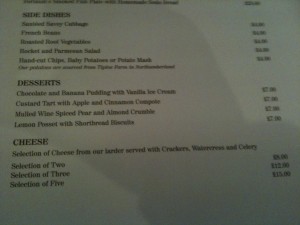 Ah, lunch at Fortnum & Mason in London — without doubt, the most posh place we ever have lunch at. By the time we get to dessert, we only have enough stomach room to split a piece of chocolate torte. But the cheese plate intrigues me — both for its culinary delights and its price structure. After over 300 years in existence, Fortnum probably has the pricing nearly perfect to maximize profits from cheese servings; so I assume that the lower marginal price for the 4th and 5th slices of cheese (£1.50 each), compared to the 1st through 3rd (£4 each) makes sense. Even a cheese addict (which I am) would be satisfied with 3 slices, so that at 4 or 5 slices for dessert the demand elasticity is probably quite low. The only way they’ll sell these is by cutting price a lot — probably still profit-increasing, given the quite low marginal cost of an extra helping of cheese. Thus demand-based price discrimination would dictate this non-linear pricing structure.
Comments